


Introduction
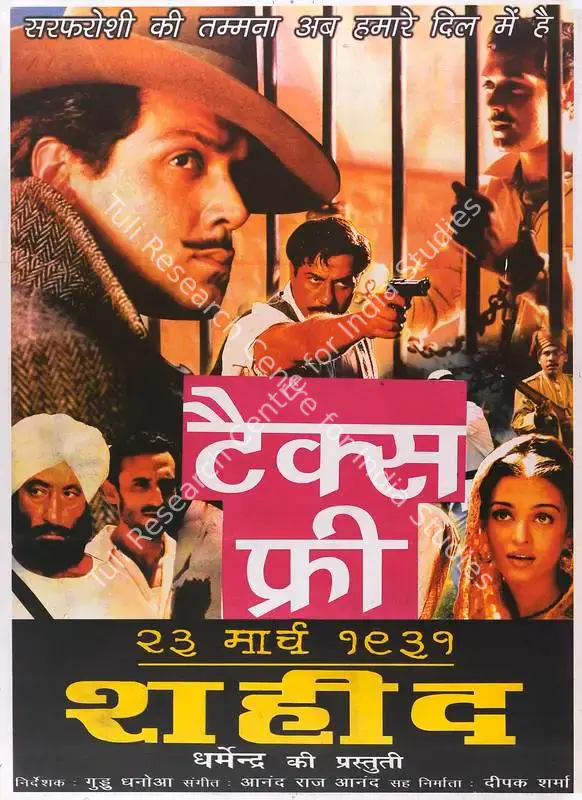
23rd March 1931: Shaheed (2002) A biographical historical drama directed by Guddu Dhanoa that chronicles the life and martyrdom of the Indian revolutionary Bhagat Singh, the film reconstructs the events leading to the execution of Bhagat Singh and his fellow revolutionaries, Shivaram Rajguru and Sukhdev Thapar, on 23 March 1931. Bobby Deol portrays Bhagat Singh, while Sunny Deol plays Chandra Shekhar Azad. The supporting cast includes Amrita Singh as Vidyavati Kaur Sandhu, Bhagat Singh's mother, alongside Rahul Dev, Vicky Ahuja, Vivek Shauq, and Raja Bundela. Aishwarya Rai appears in a special role as Mannewali.
Released simultaneously with The Legend of Bhagat Singh, directed by Rajkumar Santoshi, the film faced intense competition at the box office. The simultaneous release of multiple films centred on Bhagat Singh significantly affected the commercial performance of both productions.
Set in the mid-1920s during British colonial rule, the narrative follows Bhagat Singh, Chandrashekhar Azad, Sukhdev, and Rajguru as they dedicate themselves to India's struggle for independence. The turning point in the story occurs after the brutal assault and subsequent death of Lala Lajpat Rai at the hands of the colonial police. Motivated by a desire for justice, Bhagat Singh and his associates assassinate a British official believed to be responsible. Their subsequent arrest leads to imprisonment and severe torture. During their trial, the revolutionaries openly accept responsibility for their actions, asserting that their deeds were committed in the service of India's freedom. Rejecting their justification, the colonial judiciary sentences them to imprisonment and, eventually, to death on charges of treason and assassination. One of the film's most poignant moments depicts Bhagat Singh, bound in chains, meeting his mother in prison and expressing his conviction that India's struggle for true freedom would continue beyond political independence.
The soundtrack, composed by Anand Raaj Anand with lyrics by Dev Kohli, reinforces the film's nationalist ethos through patriotic compositions such as Mera Rang De Basanti Chola, Deshnu Challo, and Sarfaroshi Ki Tamanna. These songs are performed by prominent singers including Hans Raj Hans, Alka Yagnik, Veer Rajinder, Bhupinder Singh, Mohammed Salamat, Vinod Rathod, and Udit Narayan, and serve to amplify the emotional and ideological resonance of the narrative.
Despite its patriotic appeal and ensemble cast, 23rd March 1931: Shaheed underperformed commercially, earning approximately ₹14.25 crore during its theatrical run. Critics largely attributed its disappointing box-office performance to the simultaneous release of The Legend of Bhagat Singh and the earlier release of Shaheed-E-Azam (2002), arguing that the competing portrayals of Bhagat Singh fragmented audiences and diminished the commercial prospects of all three films.
राजकुमार संतोषी की फ़िल्म 'द लीजेंड ऑफ़ भगत सिंह' के साथ ही रिलीज़ होने के कारण, इस फ़िल्म को बॉक्स ऑफ़िस पर कड़ी टक्कर का सामना करना पड़ा। भगत सिंह पर बनी कई फ़िल्मों के एक साथ रिलीज़ होने का असर दोनों फ़िल्मों की कमाई पर काफ़ी पड़ा।
यह कहानी 1920 के दशक के मध्य की है, जब भारत पर ब्रिटिश शासन था। इसमें भगत सिंह, चंद्रशेखर आज़ाद, सुखदेव और राजगुरु की कहानी दिखाई गई है, जिन्होंने ख़ुद को भारत की आज़ादी की लड़ाई के लिए समर्पित कर दिया था। कहानी में एक अहम मोड़ तब आता है जब औपनिवेशिक पुलिस के बेरहम हमले में लाला लाजपत राय की मौत हो जाती है। न्याय की उम्मीद में, भगत सिंह और उनके साथी उस ब्रिटिश अधिकारी की हत्या कर देते हैं जिसे वे इसके लिए ज़िम्मेदार मानते हैं। इसके बाद उन्हें गिरफ़्तार कर लिया जाता है और जेल में कड़ी यातनाएँ दी जाती हैं। मुक़दमे के दौरान, क्रांतिकारी खुलेआम अपनी हरकतों की ज़िम्मेदारी लेते हैं और कहते हैं कि उन्होंने ये काम भारत की आज़ादी के लिए किए थे। उनकी दलीलों को खारिज़ करते हुए, औपनिवेशिक अदालत उन्हें देशद्रोह और हत्या के आरोप में जेल और अंततः मौत की सज़ा सुनाती है। फ़िल्म का एक बहुत ही भावुक पल वह है जब ज़ंजीरों में जकड़े भगत सिंह जेल में अपनी माँ से मिलते हैं और अपना विचार ज़ाहिर करते हैं कि भारत की सच्ची आज़ादी की लड़ाई राजनीतिक आज़ादी के बाद भी जारी रहेगी।
आनंद राज आनंद के संगीत और देव कोहली के बोलों वाले इस साउंडट्रैक में 'मेरा रंग दे बसंती चोला', 'देशनू चलो' और 'सरफ़रोशी की तमन्ना' जैसे देशभक्तिपूर्ण गीतों के ज़रिए फ़िल्म की राष्ट्रवादी भावना को और मज़बूत किया गया है। इन गानों को हंस राज हंस, अलका याग्निक, वीर राजिंदर, भूपिंदर सिंह, मोहम्मद सलामत, विनोद राठौड़ और उदित नारायण जैसे मशहूर गायकों ने गाया है और ये गाने फ़िल्म की कहानी के भावनात्मक और वैचारिक असर को और बढ़ाते हैं।
देशभक्ति वाली अपील और कई बड़े कलाकारों के होने के बावजूद, '23 मार्च 1931: शहीद ' बॉक्स ऑफ़िस पर अच्छा प्रदर्शन नहीं कर पाई और सिनेमाघरों में दिखाए जाने के दौरान इसने लगभग ₹14.25 करोड़ की कमाई की। आलोचकों का मानना था कि इसके निराशाजनक बॉक्स-ऑफ़िस प्रदर्शन का मुख्य कारण 'द लीजेंड ऑफ भगत सिंह' का उसी समय रिलीज़ होना और 'शहीद-ए-आज़म' (2002) का पहले रिलीज़ हो जाना था। उनका तर्क था कि भगत सिंह को अलग-अलग तरह से दिखाए जाने के कारण दर्शक बंट गए और तीनों फ़िल्मों की कमाई की संभावनाएँ कम हो गईं।
Body of Work
Research Centre
Related
2