

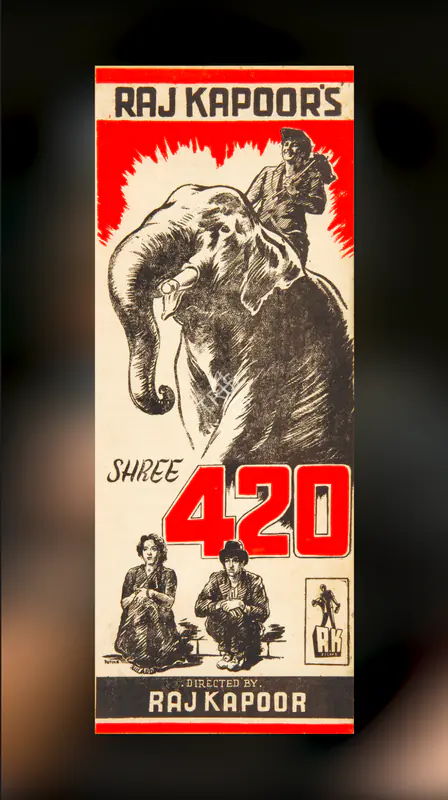
Tuli Research Centre for India Studies (Editor). "Ramaiya Vastavaiya" - When Innocence Became a Political Act | Shree 420 (1955), 05 August 2026 | In-house Video | 00883652
1 min 16 sec · Vertical Video
"Ramaiya Vastavaiya" - When Innocence Became a Political Act | Shree 420 (1955)
Tuli Research Centre for India Studies (Editor)
Document TypeIn-house Video
Date05 August 2026
Duration1 min 16 sec
FormatVertical Video
Description
"Ramaiya Vastavaiya" from Shree 420 (1955) is far more than a folk-inflected street song. Writer and Cinephile Juhi Saklani reflects on Shailendra's contribution towards building the Raj Kapoor persona, noting that his lyrics carry a quality of innocence and moral incorruptibility that is, in its own way, a political stance. To sound that guileless in a world of compromise is itself an act of resistance.
Ravikant, Professor, CSDS (Centre for the Study of Developing Societies), picks up on a related thread, observing that the image of the worker or peasant singing while working, as in this song, is a recurring and almost static theme in Hindi cinema's representation of labour.
This clip is from the workshop "A Musical Glue for Nation-Building: Deconstructing the Film Song", presented by the Tuli Research Centre for India Studies (T.R.I.S.) at the 7th Self-Discovery via Rediscovering India Festival, featuring Madan Gopal Singh, Amit Khanna, Ravikant, Juhi Saklani and Neville Tuli.