

Pather Panchali (1955)

26 August 1955

Satyajit Ray's debut masterpiece launched the Apu Trilogy with its tender portrayal of Bengali village life winning Best Human Document at Cannes
Introduction
Preface — Pather Panchali (1955)

Ray, Satyajit (Director), Pather Panchali, 1955 | Poster

Mitra, Subrata (Cinematographer), Pather Panchali, 1955. Low Budget Shooting | Working Still

Ray, Satyajit (Director), Pather Panchali, 1955 | Photographic Still
Pather Panchali (1955) A landmark in cinematic history, Pather Panchali (Song of the Little Road), written and directed by the visionary Satyajit Ray, heralded a new era for Indian and world cinema. This Bengali-language masterpiece, adapted from Bibhutibhushan Bandyopadhyay's 1929 novel of the same name, marked Ray's directorial debut and laid the foundation for what would become the legendary Apu Trilogy. With deeply affecting performances by Subir Banerjee, Kanu Banerjee, Karuna Banerjee, Uma Dasgupta, and the unforgettable Chunibala Devi, the film stands as a timeless meditation on childhood, familial bonds, and the quiet dignity of life amidst poverty. It was praised by the critics for being "pure cinema," with no trace of theatrical elements, an approach that made it unique for its time. Set in the rustic village of Nischindipur during the 1910s, the narrative traces the tender yet heartrending...
Read More
पाथेर पांचाली (1955) सिनेमाई इतिहास में एक मील का पत्थर मानी जाने वाली पाथेर पांचाली (पथ का गान) के लेखक और निर्देशक दूरदर्शी फ़िल्मकार सत्यजित राय थे। कहना होगा कि इस फ़िल्म के साथ भारतीय और विश्व सिनेमा के लिए एक नए युग का शुभारंभ होता है। बिभूतिभूषण बंद्योपाध्याय के सन् 1929 में इसी नाम से लिखे बांग्ला उपन्यास पर आधारित यह बांग्ला भाषा की उत्कृष्ट फ़िल्म सत्यजित राय का सिनेमा की दुनिया में निर्देशकीय पदार्पण भी थी। इसी फ़िल्म के साथ आगे चलकर किंवदंती सरीख़ी प्रसिद्धि हासिल करनेवाली फ़िल्म त्रयी 'अपु त्रयी' की नींव रखी जाती है। सुबीर बनर्जी, कानू बनर्जी, करुणा बनर्जी, उमा दासगुप्ता और अविस्मरणीय चुन्नीबाला देवी के स्वाभाविक अभिनय ने इस फ़िल्म को बचपन, पारिवारिक संबंधों, निर्धनता और संघर्ष में मौजूद जीवन जिजीविषा की शालीन गरिमा पर लिखा एक शाश्वत दस्तावेज़ बना दिया। आलोचकों ने इसे “शुद्ध सिनेमा” कहा। ऐसा सिनेमा जिसमें रंगमंचीय तत्वों का कोई अंश नहीं था और फ़िल्म का यही मौलिक नज़रिया इसे अपने समय की अन्य फ़िल्मों से विशिष्ट बना देता है। सन् 1910 के दशक के निश्चिंदीपुर गाँव की पृष्ठभूमि पर आधारित इस कथा में नन्हे से अपु और उसकी उत्साही बड़ी बहन दुर्गा के कोमल किंतु हृदयविदारक बालमन के सफ़र का चित्रण है। दोनों बच्चे गरीबी के साये में पले...
Read More
Body of Work
Pather Panchali (1955)

Mitra, Subrata (Cinematographer), Pather Panchali, 1955 | Photographic Still | CinemaEducation | 00663485
[1/9]
Sarbojaya (Karuna Banerjee) struggles to arrange two square meals for her children in their dilapidated ancestral home at Nischindipur. The family survives on the single income of the father, Harihar who is a Brahmin priest and scholar with little ambition in life and even lesser means. Sarbojaya pines for the day when their house will be repaired and made livable, their loans will be repayed and the family will get a semblance of stability. She is expecting a second child, her daughter Durga is little. Harihar has returned from a eight year sojourn in Banaras and is struggling to find income in the village. Indir Thakuran (superbly sustained by Chunibala Devi) is the octogenarian sister of Harihar who inhabits a broken outhouse. Sarbojaya is hostile to her presence. She cannot help but see the old widow as an imposition draining their already thin resources. Scorned, the matron leaves the house once in every fortnight to go find a shelter somewhere else, in a world where she has no one to call her own.


Mitra, Subrata (Cinematographer), Pather Panchali, 1955 | Photographic Still | CinemaEducation | 00663485
[1/9]
Sarbojaya (Karuna Banerjee) struggles to arrange two square meals for her children in their dilapidated ancestral home at Nischindipur. The family survives on the single income of the father, Harihar who is a Brahmin priest and scholar with little ambition in life and even lesser means. Sarbojaya pines for the day when their house will be repaired and made livable, their loans will be repayed and the family will get a semblance of stability. She is expecting a second child, her daughter Durga is little. Harihar has returned from a eight year sojourn in Banaras and is struggling to find income in the village. Indir Thakuran (superbly sustained by Chunibala Devi) is the octogenarian sister of Harihar who inhabits a broken outhouse. Sarbojaya is hostile to her presence. She cannot help but see the old widow as an imposition draining their already thin resources. Scorned, the matron leaves the house once in every fortnight to go find a shelter somewhere else, in a world where she has no one to call her own.
Satyajit Ray's debut film, Pather Panchali, is the first film of his 'Apu Trilogy'. It represents the beginning of an alternative tradition in Indian cinema, and is the first in a long line of exceptional works that earned Ray a place amongst the world's greatest filmmakers. Enormously touching in its simplicity and visual beauty, Pather Panchali was the first Indian film to achieve widespread international acclaim. Its freshness, its lyrical visual and narrative style and poetic tension established Ray as a master filmmaker and brought Indian cinema into international limelight. The time is early 20th century. In a remote village in Bengal, a Brahmin family - a priest. Harihar, his wife Sarbajaya, daughter Durga, son Apu and his aged cousin Indira Thakrun - struggles to make ends meet. Though the film deals with a poor family's grim battle for survival, it has no trace of melodrama. What is projected instead is the respect for human dignity. Without any experience in filmmaking, Ray started shooting the film in 1952 but was forced to stop for more than a year because of financial constraints. Dr B. C. Roy, the then Chief Minister of West Bengal, was shown the portion of film which had been shot till then. He agreed to give the money but misunderstood the film's nature, seeing it as a documentary promoting rural upliftment and development! Photographs by Nemai Ghosh from the Tuli Family Library & Archive Collection.
Art Director
Bansi Chandragupta
Assistant Directors
Ashish Burman,
Subir Hajra,
Sant Chattopadhyay
Background Score by
Ravi Shankar
Banner
Government of West Bengal
Cinematographer
Subrata Mitra
Controller of Production
Anil Chowdhury
Dialogue Writer
Satyajit Ray
Director
Satyajit Ray
Editing
Dulal Dutta
Lead Cast
Uma Das Gupta,
Subir Banerjee,
Kanu Bannerjee,
Karuna Bannerjee
Lead Cast Rest
Runki Banerjee,
Tulshi Chakraberty,
Aparna Devi,
Chunibala Devi,
Reba Devi
Music by
Ravi Shankar
Music Director
Ravi Shankar
Poster Designer
Satyajit Ray
Presented by Institution
Government Of
Publicity Designer
Satyajit Ray
Screenplay Writer
Satyajit Ray
Sound Recording
Bhupen Ghosh
Story Writer
Bibhutibhushan Bandyopadhyay
Research Centre
Sort By | Year (ASC)

Ray, Satyajit (Director), Pather Panchali, 1955. Apu in Pather Panchali | Photographic Still
Ray, Satyajit (Director), Pather Panchali, 1955 | Poster

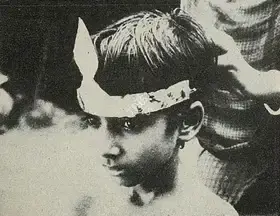
Mitra, Subrata (Cinematographer), Pather Panchali, 1955. Little Apu | Photographic Still

Mitra, Subrata (Cinematographer), Pather Panchali, 1955. The Mother's Persistent Sense of Privation : Pather Panchali | Photographic Still

Mitra, Subrata (Cinematographer), Pather Panchali, 1955. Journey from Country to City : Apu's Classical Profile : Aparajito | Photographic Still

Mitra, Subrata (Cinematographer), Pather Panchali, 1955. The Wild Sister Sacrificed in the Ancestral Village : Pather Panchali | Photographic Still

Mitra, Subrata (Cinematographer), Pather Panchali, 1955. On Holiday from School | Photographic Still

Mitra, Subrata (Cinematographer), Pather Panchali, 1955. The Priestly Family Bereaved : Pather Panchali | Photographic Still

Mitra, Subrata (Cinematographer), Pather Panchali, 1955. Indifferent Ritual : Aparajito | Photographic Still

Mitra, Subrata (Cinematographer), Pather Panchali, 1955. Durga's unfinished desire : Pather Panchali | Photographic Still

Mitra, Subrata (Cinematographer), Pather Panchali, 1955. Performing as a Priest | Photographic Still

Mitra, Subrata (Cinematographer), Pather Panchali, 1955. Aunt Indir, the ultimate waif : Pather Panchali | Photographic Still

Mitra, Subrata (Cinematographer), Pather Panchali, 1955. Past Plenitude | Photographic Still

Mitra, Subrata (Cinematographer), Pather Panchali, 1955. Coming up Over the Horizon : Durga, Apu and Scarecrow : Pather Panchali | Photographic Still

Mitra, Subrata (Cinematographer), Pather Panchali, 1955. The Past, like Durga: Rural, Primitive, Childlike: Pather Panchali | Photographic Still
Mitra, Subrata (Cinematographer), Pather Panchali, 1955. Low Budget Shooting | Working Still

Mitra, Subrata (Cinematographer), Pather Panchali, 1955. Civilizational motifs: Death of Harihar: Aparajito | Photographic Still

Mitra, Subrata (Cinematographer), Pather Panchali, 1955. Little Apu, indelible image: Pather Panchali | Photographic Still

Mitra, Subrata (Cinematographer), Pather Panchali, 1955. Durga with Aunt Indir, shared pleasures : Pather Panchali | Photographic Still
Mitra, Subrata (Cinematographer), Pather Panchali, 1955 | Photographic Still
Sort By | Year (ASC)

Seton, Marie (Author). Portrait of a Director Satyajit Ray, 1971 | Authored Book | 00845609

Ewing, Gulshan (Editor). Star & Style, 2 April 1971 | Magazine | 00808502

Ewing, Gulshan (Editor). Star & Style, 2 April 1971 | Magazine | 00808502

Seton, Marie (Author). Portrait of A Director Satyajit Ray, 1972 | Authored Book | 00845625

Wolf, William (Author). Landmark Films, 1979 | Authored Book | 00843992

Ray, Satyajit (Author). Film India, 1981 | Authored Book | 00845593

Unknown (Interviewer). Apprenticeship. n.d. | Interview | 00647279

Dasgupta, Chidananda (Author). Comparative analysis of Pather Panchali as Novel, Script and Film. n.d. | Research Material | 00647278
No more items to load
Sort By | Year (ASC)
Ray, Satyajit (Director), Pather Panchali, 1955. Apu in Pather Panchali | Photographic Still
Ray, Satyajit (Director), Pather Panchali, 1955 | Poster
Mitra, Subrata (Cinematographer), Pather Panchali, 1955. Little Apu | Photographic Still
Mitra, Subrata (Cinematographer), Pather Panchali, 1955. The Mother's Persistent Sense of Privation : Pather Panchali | Photographic Still
Mitra, Subrata (Cinematographer), Pather Panchali, 1955. Journey from Country to City : Apu's Classical Profile : Aparajito | Photographic Still
Mitra, Subrata (Cinematographer), Pather Panchali, 1955. The Wild Sister Sacrificed in the Ancestral Village : Pather Panchali | Photographic Still
Mitra, Subrata (Cinematographer), Pather Panchali, 1955. On Holiday from School | Photographic Still
Mitra, Subrata (Cinematographer), Pather Panchali, 1955. The Priestly Family Bereaved : Pather Panchali | Photographic Still
Mitra, Subrata (Cinematographer), Pather Panchali, 1955. Indifferent Ritual : Aparajito | Photographic Still
Mitra, Subrata (Cinematographer), Pather Panchali, 1955. Durga's unfinished desire : Pather Panchali | Photographic Still
Mitra, Subrata (Cinematographer), Pather Panchali, 1955. Performing as a Priest | Photographic Still
Mitra, Subrata (Cinematographer), Pather Panchali, 1955. Aunt Indir, the ultimate waif : Pather Panchali | Photographic Still
Mitra, Subrata (Cinematographer), Pather Panchali, 1955. Past Plenitude | Photographic Still
Mitra, Subrata (Cinematographer), Pather Panchali, 1955. Coming up Over the Horizon : Durga, Apu and Scarecrow : Pather Panchali | Photographic Still
Mitra, Subrata (Cinematographer), Pather Panchali, 1955. The Past, like Durga: Rural, Primitive, Childlike: Pather Panchali | Photographic Still
Mitra, Subrata (Cinematographer), Pather Panchali, 1955. Low Budget Shooting | Working Still
Mitra, Subrata (Cinematographer), Pather Panchali, 1955. Civilizational motifs: Death of Harihar: Aparajito | Photographic Still
Mitra, Subrata (Cinematographer), Pather Panchali, 1955. Little Apu, indelible image: Pather Panchali | Photographic Still
Mitra, Subrata (Cinematographer), Pather Panchali, 1955. Durga with Aunt Indir, shared pleasures : Pather Panchali | Photographic Still
Mitra, Subrata (Cinematographer), Pather Panchali, 1955 | Photographic Still
No more items to load

EN
EN