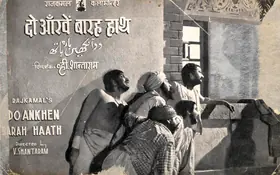

Do Ankhen Barah Haath (1957)

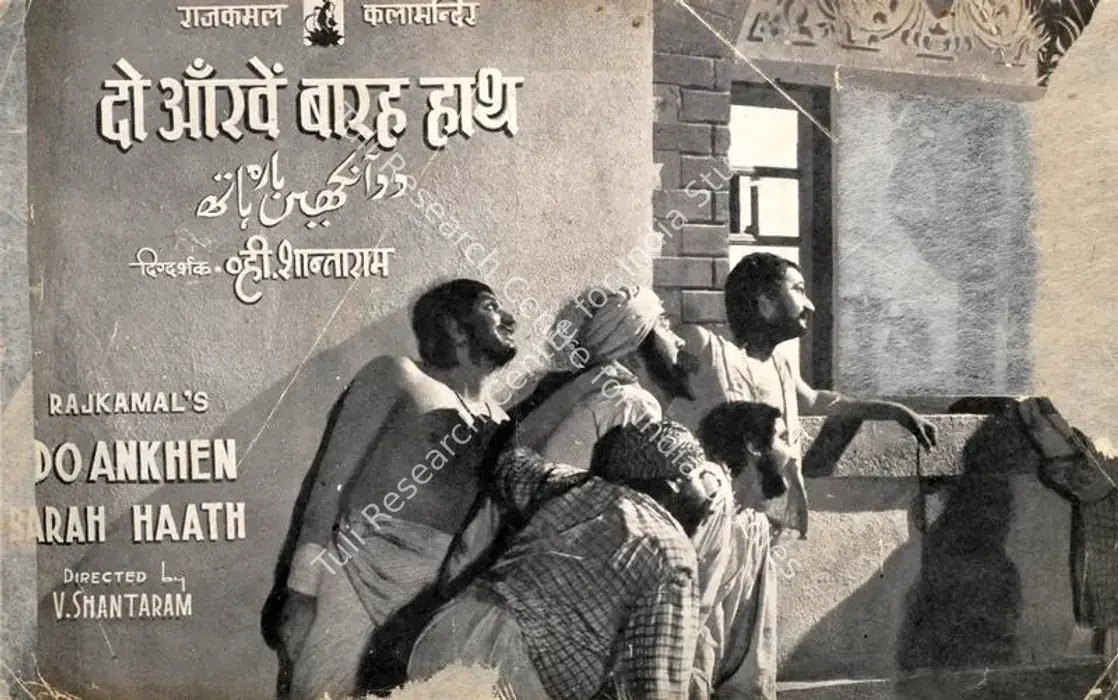
V Shantaram directs this acclaimed social drama about a jailer who takes six hardened criminals to farm land believing in rehabilitation over punishment
Introduction
Preface — Do Ankhen Barah Haath (1957)
Shantaram, V. (Director), Do Ankhen Barah Haath, 1957 | Song-Synopsis Booklet
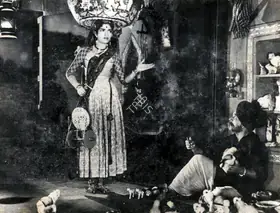
Balakrishna, G. (Cinematographer), Do Ankhen Barah Haath, 1957 | Photographic Still
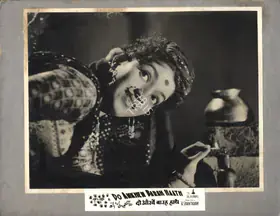
Balakrishna, G. (Cinematographer), Do Ankhen Barah Haath, 1957 | Photographic Still Mounted on Lobby Card
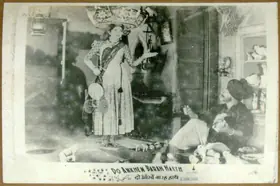
Balakrishna, G. (Cinematographer), Do Ankhen Barah Haath, 1957 | Lobby Card
V Shantaram's Do Aankhen Barah Haath masterfully harnesses the power of cinema as a mass medium for social reform and enlightenment. It is a story of a progressive jail warden determined to rehabilitate six dangerous convicts by placing trust in their inherent humanity. The film questions the scope of punitive systems and embraces the potential for personal redemption through empathy and reform. Set in the context of a newly independent India, the narrative mirrors the nation's own struggle with social transformation and the pursuit of a moral framework that balances authority with compassion and justice. The year 1957 was a watershed moment for Indian cinema, with socially conscious films like Mother India, Naya Daur, Pyaasa, and Do Aankhen Barah Haath dominating both box offices and public discourse. These films addressed critical issues such as poverty, modernising forces and justice, resonating deeply...
Read More
निर्देशक व्ही. शांताराम की दो आँखें बारह हाथ एक जनमाध्यम के रूप में सिनेमा की ताक़त का सामाजिक सुधार और ज्ञानोदय के लिए इस्तेमाल का बड़ा विलक्षण उदाहरण है। यह एक ऐसे प्रगतिशील सोच रखनेवाले जेलर की कहानी है जो छह खतरनाक अपराधियों की भीतरी अच्छाई और मानवता पर भरोसा करके उनका पुनर्वास करने का दृढ़ संकल्प लेता है। फिल्म दंडात्मक प्रणालियों की वैधता पर सवाल उठाती है और अपराधी में मौलिक बदलाव लाने के लिए सहानुभूति और सुधारात्मक उपायों का समर्थन करती है। एक नव स्वतंत्र मुल्क भारत के संदर्भ में देखें तो दो आँखे बारह हाथ की कहानी बताती है कि सामाजिक परिवर्तन की प्रक्रिया में राष्ट्र को किन संघर्षों से गुज़रना पड़ा। फ़िल्म में एक ऐसी नैतिक व्यवस्था की खोज दिखती है जहाँ सत्ता को करुणा और न्याय जैसे मूल्यों से जोड़कर संतुलन प्रदान किया गया है। सन् 1957 का साल भारतीय सिनेमा के लिए एक मील के पत्थर जैसा था। उस साल रिलीज़ हुई मदर इंडिया, नया दौर, प्यासा और दो आँखें बारह हाथ जैसी सामाजिक जागरूकता से भरी फ़िल्मों ने बॉक्स ऑफ़िस और सार्वजनिक विमर्श दोनों पर अपना गहरा प्रभाव कायम किया। इन फिल्मों ने समाज को मथ रहे गरीबी, आधुनिकता और न्याय से जुड़े महत्वपूर्ण सवालों को आवाज़ दी और उस दौर के दर्शकों के...
Read More
Body of Work
Do Ankhen Barah Haath (1957)
Banner
Rajkamal Kalamandir
Cinematographer
G. Balakrishna
Director
V. Shantaram
Lead Cast
V. Shantaram,
B.M. Vyas,
Sandhya,
Ulhas
Lead Cast Rest
S. Bhosle,
G. Inavale,
Baburao Pendharkar,
Paul Sharma,
S.K. Singh,
Chandorkar,
Gajendra,
Samar,
Suneel,
Tyagraj

Aye Maalik Tere Bande Ham
Lata Mangeshkar
Main Gaun Tu Chup Ho Ja
Lata Mangeshkar
Saiyan Jhuthon Ka Bada
Lata Mangeshkar
Tak Tak Dhum Dhum
Lata Mangeshkar
Umad Ghumadkar Aayi Re Ghata
Manna Dey, Lata Mangeshkar
Aye Maalik Tere Bande Ham
Lata Mangeshkar
02:37
Main Gaun Tu Chup Ho Ja
Lata Mangeshkar
04:16
Saiyan Jhuthon Ka Bada
Lata Mangeshkar
02:48
Tak Tak Dhum Dhum
Lata Mangeshkar
05:09
Umad Ghumadkar Aayi Re Ghata
Manna Dey, Lata Mangeshkar
04:06

—
Research Centre
Sort By | Year (ASC)
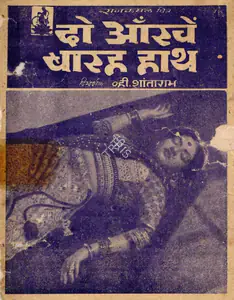
Shantaram, V. (Director), Do Ankhen Barah Haath, 1957 | Song-Synopsis Booklet
Shantaram, V. (Director), Do Ankhen Barah Haath, 1957 | Song-Synopsis Booklet
Balakrishna, G. (Cinematographer), Do Ankhen Barah Haath, 1957 | Lobby Card
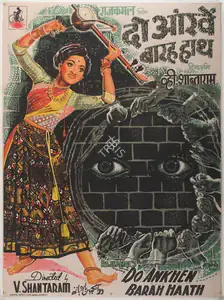
Shantaram, V. (Director), Do Ankhen Barah Haath, 1957 | Full Sheet Poster
Balakrishna, G. (Cinematographer), Do Ankhen Barah Haath, 1957 | Photographic Still Mounted on Lobby Card
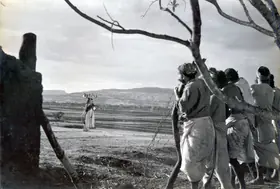
Balakrishna, G. (Cinematographer), Do Ankhen Barah Haath, 1957 | Photographic Still
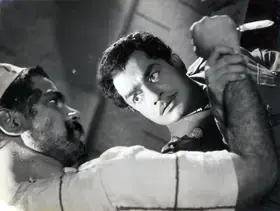
Balakrishna, G. (Cinematographer), Do Ankhen Barah Haath, 1957 | Photographic Still
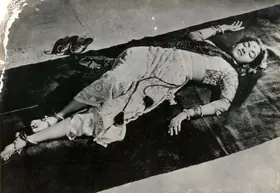
Balakrishna, G. (Cinematographer), Do Ankhen Barah Haath, 1957 | Photographic Still
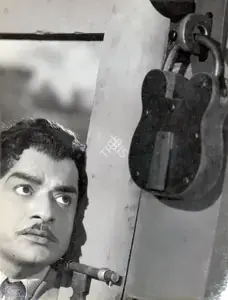
Balakrishna, G. (Cinematographer), Do Ankhen Barah Haath, 1957 | Photographic Still
Balakrishna, G. (Cinematographer), Do Ankhen Barah Haath, 1957 | Photographic Still
No more items to load
Data not found
Sort By | Year (ASC)
Shantaram, V. (Director), Do Ankhen Barah Haath, 1957 | Song-Synopsis Booklet
Shantaram, V. (Director), Do Ankhen Barah Haath, 1957 | Song-Synopsis Booklet
Balakrishna, G. (Cinematographer), Do Ankhen Barah Haath, 1957 | Lobby Card
Shantaram, V. (Director), Do Ankhen Barah Haath, 1957 | Full Sheet Poster
Balakrishna, G. (Cinematographer), Do Ankhen Barah Haath, 1957 | Photographic Still Mounted on Lobby Card
Balakrishna, G. (Cinematographer), Do Ankhen Barah Haath, 1957 | Photographic Still
Balakrishna, G. (Cinematographer), Do Ankhen Barah Haath, 1957 | Photographic Still
Balakrishna, G. (Cinematographer), Do Ankhen Barah Haath, 1957 | Photographic Still
Balakrishna, G. (Cinematographer), Do Ankhen Barah Haath, 1957 | Photographic Still
Balakrishna, G. (Cinematographer), Do Ankhen Barah Haath, 1957 | Photographic Still
No more items to load

EN
EN